Vacuum Oven Manufacturer in India – Laboratory Vacuum Drying Oven | Hema Scientific Instruments
Introduction to Vacuum Oven
Vacuum drying is an important process in pharmaceutical manufacturing, chemical testing, research and development, electronics and quality control laboratories. A Vacuum Oven is a specialized laboratory heating instrument designed to dry suitable materials under reduced pressure, helping remove moisture and certain volatile substances under controlled conditions.
Unlike a conventional hot air oven, a vacuum oven reduces the pressure inside its chamber.
This can lower the boiling temperature of moisture and some solvents, allowing compatible materials to be dried at lower temperatures when the process is properly selected.
Hema Scientific Instruments manufactures scientific and laboratory equipment in India. If you are searching for a Vacuum Oven Manufacturer in India, laboratory vacuum oven supplier or vacuum drying oven for your facility, contact Hema Scientific Instruments to discuss your application, required specifications and pricing.
What Is a Vacuum Oven?
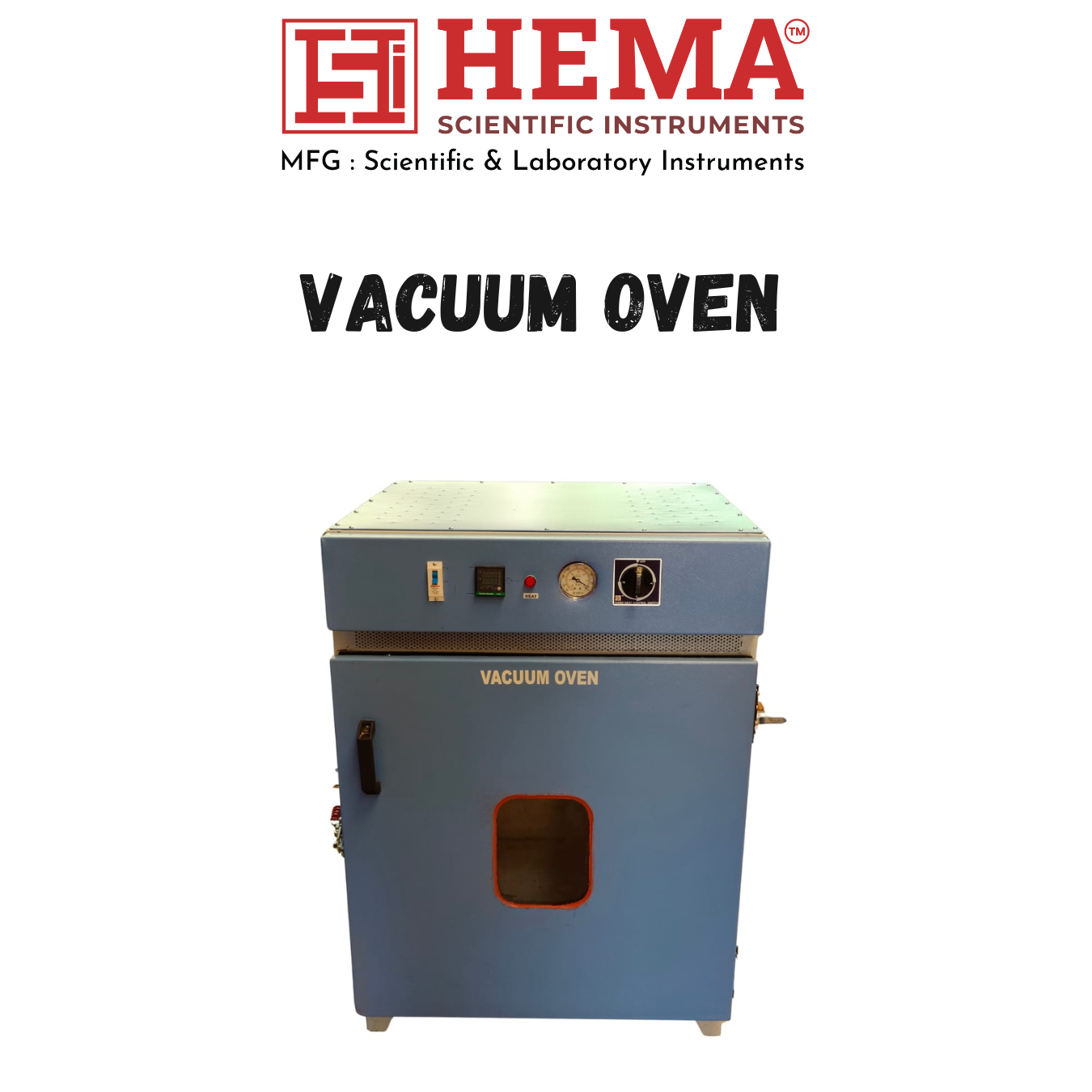
A vacuum oven is a heated chamber connected to a vacuum system that reduces the pressure inside the chamber. It is used for drying, degassing and other suitable thermal processes involving materials that may be sensitive to heat, moisture or oxidation.
Depending on the design, a laboratory vacuum oven may include a stainless steel inner chamber, electric heating elements, thermal insulation, a digital temperature controller, a vacuum gauge and a connection for a compatible vacuum pump.
The correct configuration depends on the required temperature, operating pressure, sample characteristics, solvent compatibility and the process to be performed.
Working Principle of a Vacuum Oven
The working principle of a vacuum drying oven combines controlled heating with reduced chamber pressure.
- Place the approved samples inside the chamber using suitable trays or containers.
- Close and seal the chamber door according to the manufacturer's instructions.
- Connect and operate the compatible vacuum pump to reduce chamber pressure to the required level.
- Set the desired temperature using the temperature controller.
- Monitor temperature and vacuum conditions throughout the process.
- At completion, follow the prescribed procedure to cool the chamber and safely return it to atmospheric pressure before opening the door.
Reduced pressure can lower the boiling point of moisture and some solvents. This allows drying at temperatures that may be lower than those required under atmospheric conditions.
Actual drying time and performance depend on the sample, solvent, temperature, pressure, loading and equipment configuration.
Key Features of a Laboratory Vacuum Oven
When selecting a Laboratory Vacuum Oven, consider the following features and confirm the available specifications for the model you intend to purchase.
1. Digital Temperature Controller
A digital temperature controller allows the operator to set and monitor the chamber temperature. PID-based temperature control may be available depending on the model.
2. Stainless Steel Inner Chamber
A stainless steel chamber can provide a durable, cleanable surface. Confirm the grade and compatibility with the materials and cleaning procedures used in your laboratory.
3. Vacuum Gauge
A suitable vacuum gauge helps the operator monitor chamber pressure. Check the measurement range, units and stated accuracy against your process requirements.
4. Vacuum Pump Connection
The oven may be connected to a compatible external vacuum pump. Pump selection should consider the required ultimate pressure, pumping speed, vapours and chemical compatibility.
5. Insulated Construction
Appropriate thermal insulation can reduce heat loss and support temperature control.
6. Sealed Chamber Door
A suitable door gasket and sealing arrangement help maintain the required vacuum conditions. Gasket material should be compatible with the intended process.
7. Multiple Capacity Options
Different chamber sizes are available across vacuum oven models. Choose a capacity that accommodates the samples and trays without exceeding the recommended loading arrangement.
8. Temperature and Vacuum Safety
Review over-temperature protection, pressure monitoring and other safety provisions supplied with the model. The system must be suitable for the substances and conditions involved.
How to Choose the Right Vacuum Oven
Before purchasing a vacuum oven, consider these factors:
- Temperature range: Confirm the required operating temperature and the manufacturer's specified range.
- Vacuum level: Identify the required absolute pressure or vacuum level for the process.
- Chamber capacity: Select an internal volume suitable for your sample size and quantity.
- Temperature performance: Review the manufacturer's stated accuracy, stability and uniformity.
- Construction material: Confirm chamber and gasket compatibility with the substances being processed.
- Vacuum pump: Determine whether a pump is included or needs to be supplied separately.
- Solvent compatibility: Confirm that the oven, pump and associated components are appropriate for the vapours generated.
- Safety requirements: Assess risks from flammable, reactive, toxic or corrosive materials and follow applicable procedures.
- Documentation and service: Ask about operating instructions, maintenance, calibration and available technical support.
Providing these details to the manufacturer can help identify a suitable configuration for your application.
Why Choose Hema Scientific Instruments?
Hema Scientific Instruments manufactures scientific and laboratory equipment for laboratory, pharmaceutical, research and industrial applications.
When evaluating a Vacuum Oven from Hema Scientific Instruments, discuss your required temperature, chamber size, vacuum conditions, material compatibility and application with our team.
Before placing an order, request the technical datasheet and confirm the available specifications, included accessories, safety features and applicable documentation for the selected model.
Frequently Asked Questions About Vacuum Oven
1. What is a vacuum oven used for?
A vacuum oven is used for suitable drying, degassing and thermal-processing applications under reduced pressure. Typical uses depend on the material and the process requirements.
2. What is the working principle of a vacuum oven?
The chamber is heated while its pressure is reduced using a vacuum system. Reduced pressure can lower the boiling temperature of moisture and some solvents, supporting drying under controlled conditions.
3. What is the difference between a vacuum oven and a hot air oven?
A vacuum oven uses reduced pressure during processing, while a hot air oven uses heated air at approximately atmospheric pressure. The right choice depends on the sample and the required process.
4. Does a vacuum oven require a vacuum pump?
A vacuum system is required to reduce chamber pressure. Depending on the model, the pump may be included or supplied separately. Confirm the configuration before ordering.
5. What temperature can a laboratory vacuum oven reach?
The temperature range depends on the model. Check the manufacturer's specifications and confirm that the chamber, gasket and vacuum system are suitable for the intended conditions.
6. What is the price of a vacuum oven in India?
Pricing depends on capacity, temperature range, vacuum requirements, construction and accessories. Request a quotation based on your actual specifications.
7. Is a vacuum oven suitable for pharmaceutical laboratories?
It can be suitable for specified pharmaceutical laboratory processes when the equipment's performance, materials and documentation meet the process and facility requirements.
Request a Vacuum Oven Quotation
Looking for a Vacuum Oven Manufacturer in India?
Contact Hema Scientific Instruments to discuss your laboratory vacuum oven requirements, request technical specifications and obtain pricing.
Email: sales.hsi10@gmail.com
Website: www.hema-scientific.com
Phone: +91-9974103504