Introduction
From microbiology to BOD/COD testing, the constant temperature water bath is one of the most versatile and widely used instruments in laboratories. But what exactly is it, and how does it maintain such precise temperature control?
In this guide, we'll cover everything you need to know about constant temperature water baths — from their working principle to their key applications.
What is a Constant Temperature Water Bath?
A constant temperature water bath is a laboratory instrument that heats and maintains water (or another liquid medium) at a precise, stable temperature over a set period. It's used whenever a sample needs to be incubated, warmed, or kept at a consistent temperature without direct exposure to flame or dry heat.
Constant temperature water baths are essential in:
- Microbiology and clinical laboratories
- Water and wastewater testing (BOD/COD analysis)
- Food and beverage testing labs
- Pharmaceutical and biochemical research
- Educational and academic institutions
How Does a Constant Temperature Water Bath Work?
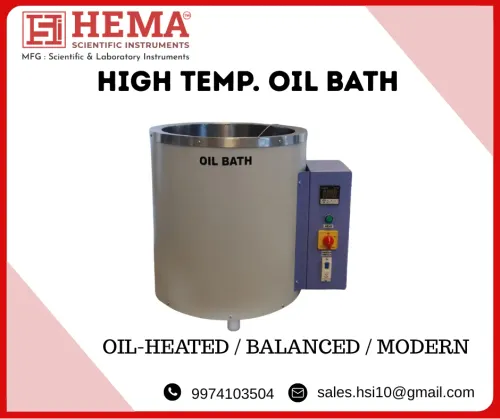
A water bath uses an immersion heater and thermostatic control system to maintain a set temperature within the water reservoir. Key components include:
- Heating element — heats the water to the desired temperature
- Digital/analog thermostat controller — maintains precise, stable temperature
- Water reservoir/chamber — holds the water and samples (often with a perforated tray or rack)
- Circulation system (in some models) — ensures uniform temperature distribution
- Lid/cover — reduces evaporation and heat loss
Samples — typically in test tubes, flasks, or BOD bottles — are placed inside the bath, where they're gently and evenly heated to the required temperature for the test duration.
Key Applications of a Constant Temperature Water Bath
- BOD and COD testing — maintaining consistent temperature during water quality analysis
- Microbiological incubation — culturing samples at specific temperatures
- Sample warming and thawing — biological and chemical samples
- Enzyme and reagent reactions — temperature-sensitive biochemical testing
- Food testing — quality control processes requiring controlled heating
- Educational demonstrations — teaching labs and research training
Water Bath vs Incubator: What's the Difference?
A common question for lab buyers is how a water bath compares to an incubator:
- Water bath — uses a liquid medium (water) for direct, rapid, uniform heat transfer; ideal for quick warming and precise short-duration temperature control
- Incubator (like a BOD incubator) — uses air circulation within a chamber; better suited for longer-duration biological incubation with controlled humidity and airflow
Types of Laboratory Water Baths
- Digital water bath — precise electronic temperature control and display
- Shaking water bath — combines temperature control with gentle agitation, useful for dissolution and mixing applications
- Serological water bath — designed specifically for serological and clinical testing protocols
- Circulating water bath — actively circulates water for improved temperature uniformity
Why Temperature Accuracy Matters
Inconsistent or fluctuating temperatures can compromise test results, especially in BOD/COD testing and microbiological work where even small deviations affect accuracy. That's why labs should choose water baths with reliable thermostatic control, good insulation, and minimal temperature drift.
Choosing the Right Water Bath for Your Lab
When selecting a constant temperature water bath, consider:
- Chamber capacity based on sample volume
- Temperature range and accuracy (± tolerance)
- Digital vs analog controller
- Additional features (shaking function, circulation, lid type)
- Build quality and corrosion-resistant construction
- Ease of cleaning and maintenance
Frequently Asked Questions
Q1. What temperature range does a constant temperature water bath cover? Most laboratory water baths operate from ambient temperature up to around 100°C, though ranges vary by model and application.
Q2. What is the difference between a water bath and an incubator? A water bath uses liquid for direct, rapid heat transfer, while an incubator uses air circulation, making it better suited for longer biological incubation with controlled airflow and humidity.
Q3. Who uses constant temperature water baths? Microbiology labs, water/wastewater testing labs, food testing labs, pharmaceutical and biochemical research facilities, and academic institutions.
Q4. Can a water bath be used for BOD testing? Yes, water baths are commonly used to maintain consistent temperatures during BOD and COD sample preparation and testing procedures.
Q5. How often should a water bath be calibrated? It's recommended to calibrate water baths periodically (commonly every 6–12 months) to maintain temperature accuracy and reliable test results.
Request a Quote
Hema Scientific Instruments
For pricing, technical details, specifications or bulk requirements:
Email: sales.hsi10@gmail.com
Website: www.hema-scientific.com
Phone: +91-9974103504