Introduction
From microbiology labs to pharmaceutical manufacturing units, the hot air oven is one of the most widely used pieces of laboratory equipment for sterilization and drying. But what exactly does it do, and how is it different from other sterilization methods like autoclaving?
In this guide, we'll cover everything you need to know about hot air ovens — from their working principle to their key applications.
What is a Hot Air Oven?
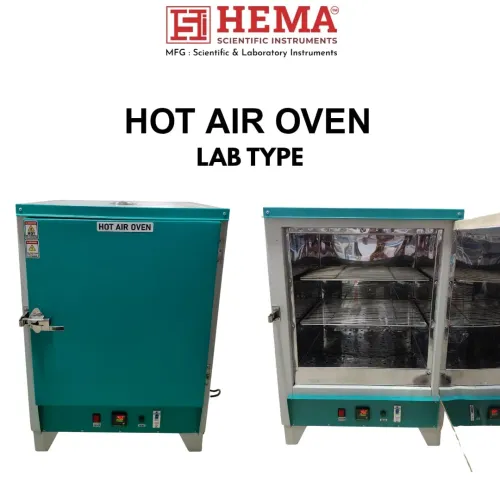
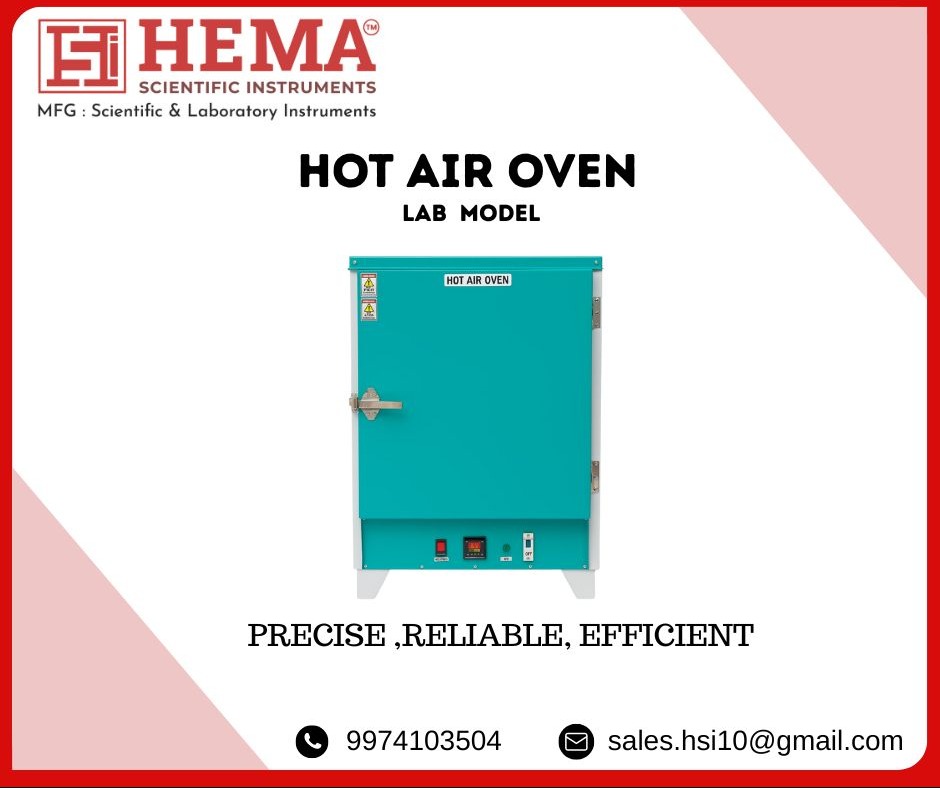
A hot air oven is a laboratory instrument that uses dry heat to sterilize equipment, glassware, and other materials, as well as to dry samples. It works by circulating hot air at controlled temperatures (typically 50°C to 300°C, depending on the model) inside an insulated chamber, destroying microorganisms through prolonged exposure to heat.
Hot air ovens are essential in:
- Microbiology and pathology laboratories
- Pharmaceutical manufacturing and quality control
- Research and academic institutions
- Food testing laboratories
- Hospitals and clinical labs
How Does a Hot Air Oven Work?
A hot air oven relies on dry heat sterilization, which works differently from moist heat methods like autoclaving. Key components include:
- Heating element — generates consistent heat within the chamber
- Blower/fan system — ensures uniform hot air circulation throughout the chamber
- Digital/microprocessor temperature controller — allows precise temperature setting and monitoring
- Insulated double-walled chamber — retains heat efficiently and improves energy consumption
- Timer control — maintains sterilization duration accurately
Items are placed inside the chamber, and the oven maintains a set temperature for a specified duration (commonly 160°C for 1–2 hours for sterilization, or lower temperatures for drying purposes).
Key Applications of a Hot Air Oven
- Sterilization of glassware — test tubes, petri dishes, pipettes
- Sterilization of surgical instruments — heat-resistant metal tools
- Drying of samples — powders, chemicals, and reagents
- Moisture content determination — used in QC testing
- Pharmaceutical sterilization — sterilizing heat-stable materials and equipment
- Research applications — sample preparation and material testing
Hot Air Oven vs Autoclave: What's the Difference?
A common point of confusion for lab buyers is choosing between a hot air oven and an autoclave:
- Hot air oven uses dry heat — better suited for materials that would be damaged by moisture (metal instruments, glassware, powders)
- Autoclave uses moist heat/steam under pressure — faster sterilization, but not suitable for moisture-sensitive materials
Why Temperature Uniformity Matters
Inconsistent heat distribution inside a hot air oven can lead to incomplete sterilization or uneven drying. That's why labs should choose ovens with strong forced-air circulation, accurate digital controllers, and reliable calibration — especially for pharmaceutical and regulatory-compliant environments.
Choosing the Right Hot Air Oven for Your Lab
When selecting a hot air oven, consider:
- Chamber capacity based on daily workload
- Maximum temperature range and accuracy (± tolerance)
- Digital vs analog controller
- Compliance with relevant standards (e.g., IS 3120)
- Build quality, insulation, and energy efficiency
- Safety features (over-temperature cut-off, door-lock safety)
Frequently Asked Questions
Q1. What temperature does a hot air oven reach? Most laboratory hot air ovens operate between 50°C and 300°C, with sterilization commonly performed at 160°C for 1–2 hours.
Q2. What is the difference between a hot air oven and an autoclave? A hot air oven uses dry heat and is ideal for moisture-sensitive items like metal instruments and glassware, while an autoclave uses moist heat/steam for faster sterilization of moisture-tolerant materials.
Q3. Who uses hot air ovens? Microbiology labs, pharmaceutical companies, hospitals, research institutions, and food testing laboratories.
Q4. How long does sterilization take in a hot air oven? Typically 1–2 hours at 160°C, though exact duration depends on the material and load size.
Q5. Can a hot air oven be used for drying samples? Yes, hot air ovens are commonly used at lower temperatures for drying powders, chemicals, and reagents, as well as for moisture content determination.
📍 Hema Scientific Instruments
📧 Email: sales.hsi10@gmail.com
🌐 Website: www.hema-scientific.com
📞 Phone: +91- 9974103504