Introduction
In pharmaceutical manufacturing and cleanroom environments, preventing contamination during material transfer is critical. That's where the static pass box comes in. But what exactly is it, and how does it help maintain cleanroom integrity?
In this guide, we'll cover everything you need to know about static pass boxes — from their working principle to their key applications.
What is a Static Pass Box?
A static pass box is a cleanroom transfer device that allows materials, components, or documents to move between two areas of different cleanliness classifications (e.g., from a non-classified area into a cleanroom) without opening both doors simultaneously — minimizing the risk of cross-contamination.
Unlike a dynamic pass box, a static pass box does not have an active air filtration/circulation system — it relies on interlocking doors and physical separation to maintain contamination control.
Static pass boxes are essential in:
- Pharmaceutical manufacturing cleanrooms
- Biotechnology and life sciences facilities
- Hospital sterile processing departments
- Electronics and semiconductor cleanrooms
- Food processing cleanroom environments
How Does a Static Pass Box Work?
A static pass box relies on a simple but effective interlocking mechanism to prevent both doors from opening at the same time. Key components include:
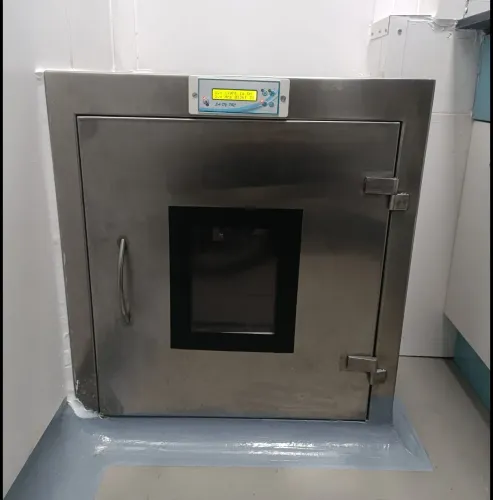
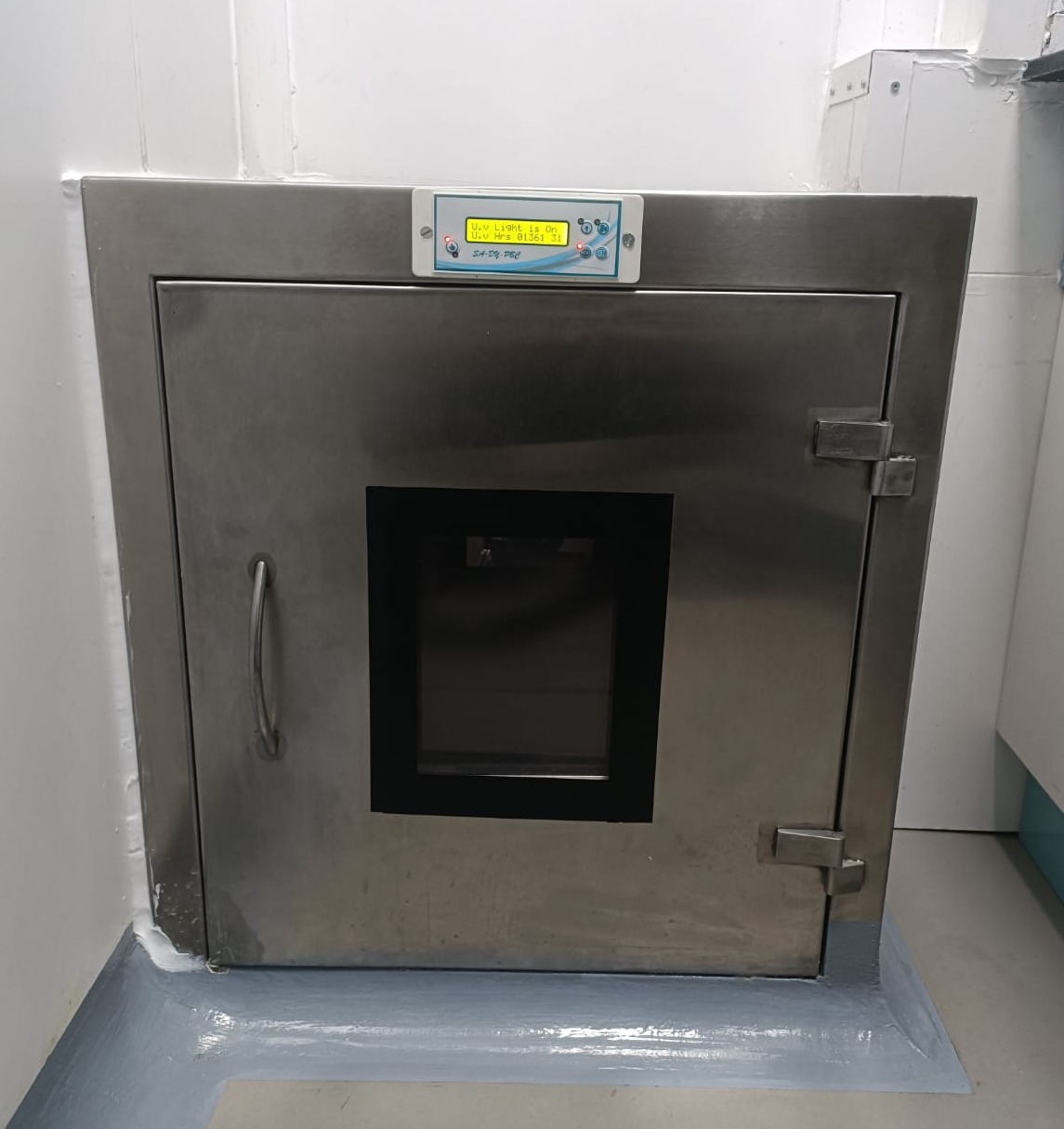
- Stainless steel chamber — corrosion-resistant, easy-to-clean construction
- Interlocking door system — mechanical or electromagnetic, ensures only one door opens at a time
- UV light (optional) — for additional surface disinfection inside the chamber
- Indicator lights — show door status (open/closed, in-use)
- Sealed gaskets — prevent air leakage between zones
Materials are placed inside from one side, the door is closed and locked, and then the opposite door is opened from the other side to retrieve the material — ensuring the two environments are never directly connected.
Key Applications of a Static Pass Box
- Material transfer into cleanrooms — pharma raw materials, components, tools
- Document transfer — moving paperwork in/out of classified areas without contamination
- Sample transfer — moving test samples between lab zones
- Contamination control — maintaining pressure and cleanliness differentials between zones
- GMP-compliant manufacturing — supporting regulatory cleanroom protocols
Static Pass Box vs Dynamic Pass Box: What's the Difference?
A common question for cleanroom buyers is which type of pass box to choose:
- Static pass box — no active air filtration, relies on interlocking doors and physical barrier; suitable for lower-risk material transfers
- Dynamic pass box — includes HEPA filtration and airflow system to actively remove contaminants during transfer; suitable for higher-classification cleanrooms (e.g., Grade A/B areas)
Why Interlocking Systems Matter
The core function of a pass box depends on reliable interlocking — if both doors could open simultaneously, the entire purpose of contamination control would be defeated. That's why labs and pharma facilities should choose pass boxes with robust mechanical or electromagnetic interlocking, tested for consistent, fail-safe operation.
Choosing the Right Static Pass Box for Your Facility
When selecting a static pass box, consider:
- Chamber size based on material/document dimensions
- Interlocking mechanism type (mechanical vs electromagnetic)
- Build material (SS 304 vs SS 316, depending on application)
- Optional features (UV disinfection, indicator lights)
- Compliance with GMP and cleanroom classification requirements
- Ease of cleaning and maintenance
A static pass box is a simple yet essential piece of cleanroom infrastructure, ensuring safe, contamination-free material transfer between zones. Choosing a well-built, reliably interlocked unit supports GMP compliance and cleanroom integrity.
At Hema Scientific Instruments, we manufacture precision static pass boxes engineered for reliability, hygiene, and long-term durability.
Frequently Asked Questions
Q1. What is the purpose of a static pass box? It allows safe transfer of materials, documents, or samples between areas of different cleanliness classifications without direct air exposure between the two zones.
Q2. What is the difference between a static and dynamic pass box? A static pass box relies on interlocking doors alone, while a dynamic pass box includes active HEPA filtration and airflow for higher-classification cleanrooms.
Q3. Who uses static pass boxes? Pharmaceutical manufacturers, biotechnology companies, hospitals, electronics/semiconductor cleanrooms, and food processing facilities.
Q4. What material are static pass boxes typically made of? Most static pass boxes are constructed from stainless steel (SS 304 or SS 316) for corrosion resistance and ease of cleaning.
Q5. Do static pass boxes require UV disinfection? UV lights are an optional add-on for additional surface disinfection, though not all static pass boxes require them depending on the application and cleanliness requirements.
📍 Hema Scientific Instruments
📧 Email: sales.hsi10@gmail.com
🌐 Website: www.hema-scientific.com
📞 Phone: +91- 9974103504