Introduction
When it comes to reliable steam sterilization, the vertical autoclave is one of the most trusted instruments used across laboratories, hospitals, and clinics. But what exactly is it, and how does it differ from a horizontal autoclave or a hot air oven?
In this guide, we'll cover everything you need to know about vertical autoclaves — from their working principle to their key applications.
What is a Vertical Autoclave?
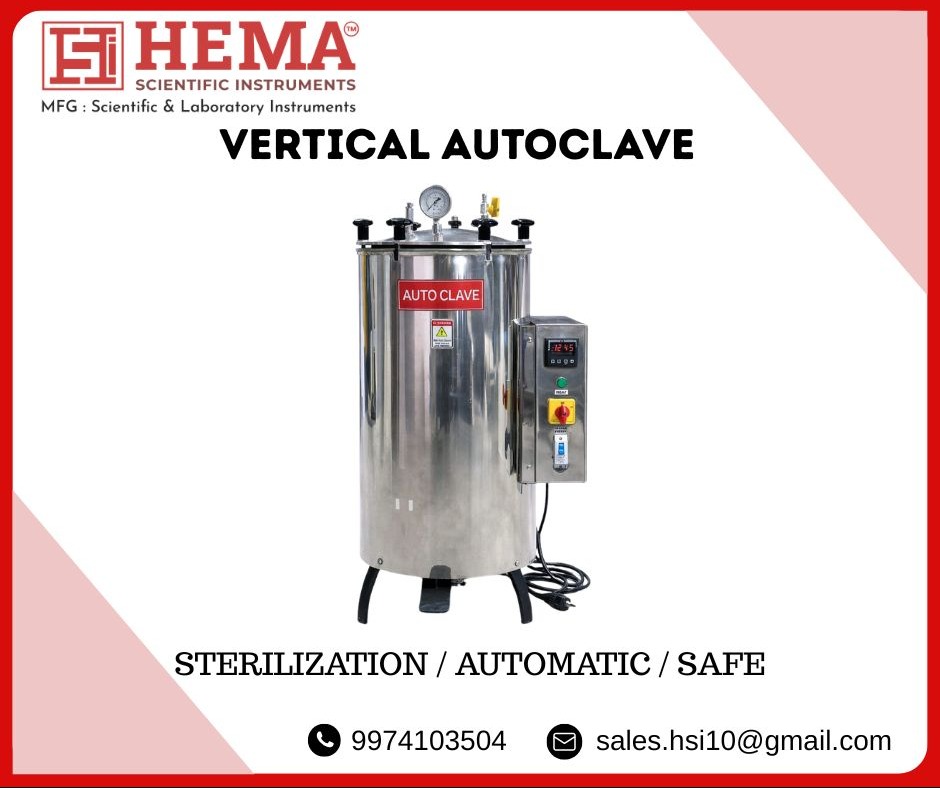
A vertical autoclave is a steam sterilization device with a top-loading, vertically oriented chamber that uses high-pressure saturated steam to sterilize equipment, media, glassware, and instruments. It's called "vertical" because the chamber opens from the top, making it space-efficient and well-suited for smaller labs and clinics compared to horizontal, front-loading models.
Vertical autoclaves are essential in:
- Microbiology and pathology laboratories
- Hospitals and clinics
- Pharmaceutical manufacturing and QC labs
- Research and academic institutions
- Veterinary clinics
How Does a Vertical Autoclave Work?
A vertical autoclave relies on moist heat sterilization, using pressurized steam to destroy microorganisms, including resistant spores. Key components include:
- Pressure vessel/chamber — vertically oriented, top-loading design
- Steam generator — produces saturated steam at controlled pressure
- Digital/microprocessor pressure and temperature controller — allows precise cycle settings and monitoring
- Safety valve and pressure release system — ensures safe operation
- Timer and cycle control — maintains sterilization duration accurately
Items are loaded into the chamber, sealed, and exposed to steam at a set temperature and pressure (commonly 121°C at 15 psi for 15–20 minutes) to achieve complete sterilization.
Key Applications of a Vertical Autoclave
- Sterilization of glassware and media — test tubes, petri dishes, culture media
- Sterilization of surgical and clinical instruments — hospitals and clinics
- Sterilization of laboratory waste — biohazard decontamination
- Pharmaceutical sterilization — sterilizing heat and moisture-stable materials
- Research applications — sample and equipment sterilization
Vertical Autoclave vs Horizontal Autoclave: What's the Difference?
A common question for buyers is which type of autoclave suits their needs:
- Vertical autoclave — top-loading, compact footprint, ideal for smaller labs/clinics with limited floor space and moderate sterilization volume
- Horizontal autoclave — front-loading, larger capacity, better suited for hospitals and high-volume sterilization needs
Vertical Autoclave vs Hot Air Oven: Steam vs Dry Heat
Buyers often compare autoclaves with hot air ovens when planning sterilization workflows:
- Vertical autoclave uses moist heat/steam — faster sterilization, ideal for moisture-tolerant items
- Hot air oven uses dry heat — better suited for moisture-sensitive items like metal instruments and powders
Most well-equipped labs use both instruments depending on the material being sterilized.
Why Pressure & Temperature Accuracy Matter
Inconsistent pressure or temperature control can result in incomplete sterilization, posing serious safety and compliance risks. That's why labs and hospitals should choose autoclaves with accurate digital controllers, reliable safety interlocks, and consistent steam distribution.
Choosing the Right Vertical Autoclave for Your Lab
When selecting a vertical autoclave, consider:
- Chamber capacity based on daily sterilization load
- Pressure and temperature range/accuracy
- Digital vs analog controller
- Compliance with relevant standards (e.g., IS 3829)
- Safety features (pressure release, door-lock interlock, over-temperature cut-off)
- Build quality and ease of maintenance
A vertical autoclave is an essential investment for any laboratory, hospital, or clinic requiring reliable, space-efficient steam sterilization. Choosing a well-built, accurately controlled unit ensures safe, consistent sterilization results.
At Hema Scientific Instruments, we manufacture precision vertical autoclaves engineered for safety, accuracy, and long-term reliability.
Frequently Asked Questions
Q1. What temperature and pressure does a vertical autoclave use? Most sterilization cycles run at 121°C and 15 psi for 15–20 minutes, though settings can vary based on the load and application.
Q2. What is the difference between a vertical and horizontal autoclave? A vertical autoclave is top-loading and more compact, ideal for smaller labs/clinics, while a horizontal autoclave is front-loading with larger capacity, suited for hospitals and high-volume needs.
Q3. Who uses vertical autoclaves? Microbiology labs, hospitals, clinics, pharmaceutical companies, research institutions, and veterinary practices.
Q4. How long does a sterilization cycle take in a vertical autoclave? Typically 15–20 minutes at 121°C, though total cycle time (including heating and cooling) may take 45–60 minutes.
Q5. How often should a vertical autoclave be validated? Regular validation and calibration (commonly every 6–12 months, or per regulatory requirements) is recommended to ensure sterilization effectiveness and compliance.
📍 Hema Scientific Instruments
📧 Email: sales.hsi10@gmail.com
🌐 Website: www.hema-scientific.com
📞 Phone: +91- 9974103504