Introduction
When laboratory processes require temperatures beyond what a water bath can safely reach, an oil bath becomes the instrument of choice. But what exactly is it, and how does it differ from a standard water bath?
In this guide, we'll cover everything you need to know about oil baths — from their working principle to their key applications.
What is an Oil Bath?
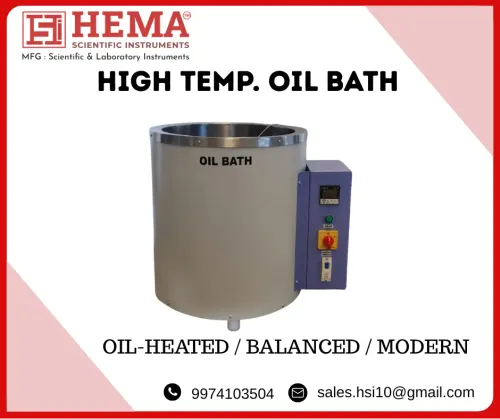
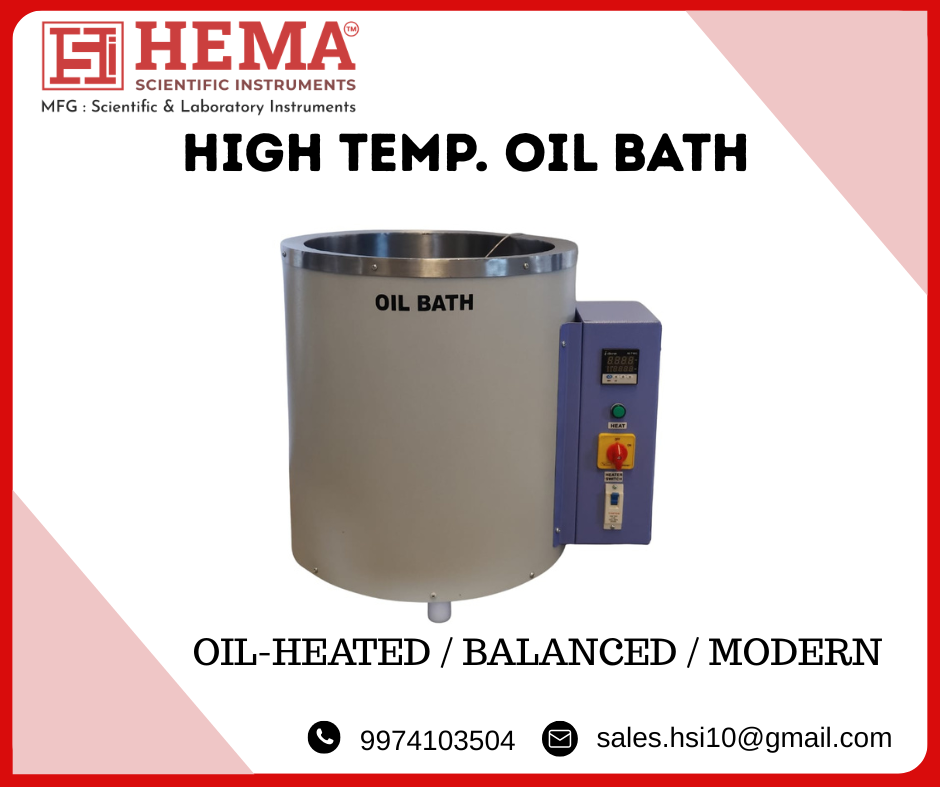
An oil bath is a laboratory heating device that uses oil (instead of water) as the heat transfer medium to provide stable, uniform heating at temperatures significantly higher than water baths can achieve — commonly up to 200°C–300°C, depending on the oil type and equipment design.
Because oil has a much higher boiling point than water, oil baths are ideal for applications requiring sustained high-temperature heating without the risk of boiling off the medium.
Oil baths are essential in:
- Chemistry and R&D laboratories
- Reflux heating applications
- Polymer and materials testing
- Industrial process simulation
- Academic and research institutions
How Does an Oil Bath Work?
An oil bath uses a heating element submerged in or surrounding an oil-filled reservoir, with a thermostatic controller maintaining a stable, set temperature. Key components include:
- Heating element — heats the oil medium to the desired temperature
- Digital/analog thermostat controller — maintains precise, stable temperature
- Oil reservoir/chamber — holds the heat-transfer oil and immersed vessels
- Stirring mechanism (in some models) — ensures uniform heat distribution
- Safety features — over-temperature cut-off, given the higher operating temperatures involved
Glassware or reaction vessels are partially or fully immersed in the heated oil, allowing gentle, even, and sustained high-temperature heating for the required duration.
Key Applications of an Oil Bath
- Reflux reactions — sustained high-temperature heating in organic chemistry
- Polymer and materials testing — controlled high-temperature exposure
- Distillation processes — providing stable heat for extended durations
- Industrial process simulation — replicating high-temperature manufacturing conditions
- Research applications — any process requiring temperatures beyond water bath limits
Oil Bath vs Water Bath: What's the Difference?
A common question for lab buyers is when to choose an oil bath over a water bath:
- Oil bath — used for high-temperature applications (up to 200°C–300°C), ideal for reflux, distillation, and industrial process work
- Water bath — used for lower-temperature applications (up to ~100°C), ideal for microbiological incubation, BOD/COD testing, and sample warming
Why Safety Matters with Oil Baths
Because oil baths operate at much higher temperatures than water baths, safety is a critical consideration. Labs should prioritize units with:
- Reliable over-temperature protection
- Stable, well-insulated construction to prevent heat loss and reduce burn risk
- Proper ventilation guidelines during use
- Compatibility with appropriate heat-transfer oils for the intended temperature range
Choosing the Right Oil Bath for Your Lab
When selecting an oil bath, consider:
- Chamber/reservoir capacity based on vessel size
- Maximum temperature range and accuracy (± tolerance)
- Digital vs analog controller
- Stirring/circulation capability, if needed
- Safety features (over-temperature cut-off, stable base design)
- Build quality and ease of maintenance
An oil bath is an essential instrument for laboratories requiring sustained, high-temperature heating beyond the capabilities of a water bath. Choosing a well-built, accurately controlled, and safety-compliant unit ensures reliable performance for demanding applications.
At Hema Scientific Instruments, we manufacture precision oil baths engineered for high-temperature accuracy, safety, and durability.
Frequently Asked Questions
Q1. What temperature range does an oil bath cover? Laboratory oil baths typically operate up to 200°C–300°C, depending on the oil type and equipment design — significantly higher than water baths.
Q2. What is the difference between an oil bath and a water bath? An oil bath is used for high-temperature applications (up to 300°C), while a water bath is limited to lower temperatures (up to ~100°C) and suited for gentler heating needs.
Q3. Who uses oil baths? Chemistry and R&D labs, materials testing facilities, industrial process labs, and academic research institutions.
Q4. What type of oil is used in an oil bath? Common heat-transfer oils include silicone oil and mineral oil, chosen based on the required temperature range and application.
Q5. Are oil baths safe to use in a laboratory? Yes, when used with proper safety precautions — over-temperature protection, stable positioning, and adequate ventilation — oil baths are safe and effective for high-temperature heating applications.
📍 Hema Scientific Instruments
📧 Email: sales.hsi10@gmail.com
🌐 Website: www.hema-scientific.com
📞 Phone: +91- 9974103504