Introduction
Whenever a laboratory needs to test materials at extremely high temperatures — for ash content, metallurgy, or ceramics analysis — a muffle furnace is the go-to instrument. But what exactly is it, and how does it differ from other heating equipment like hot air ovens?
In this guide, we'll cover everything you need to know about muffle furnaces — from their working principle to their key applications.
What is a Muffle Furnace?
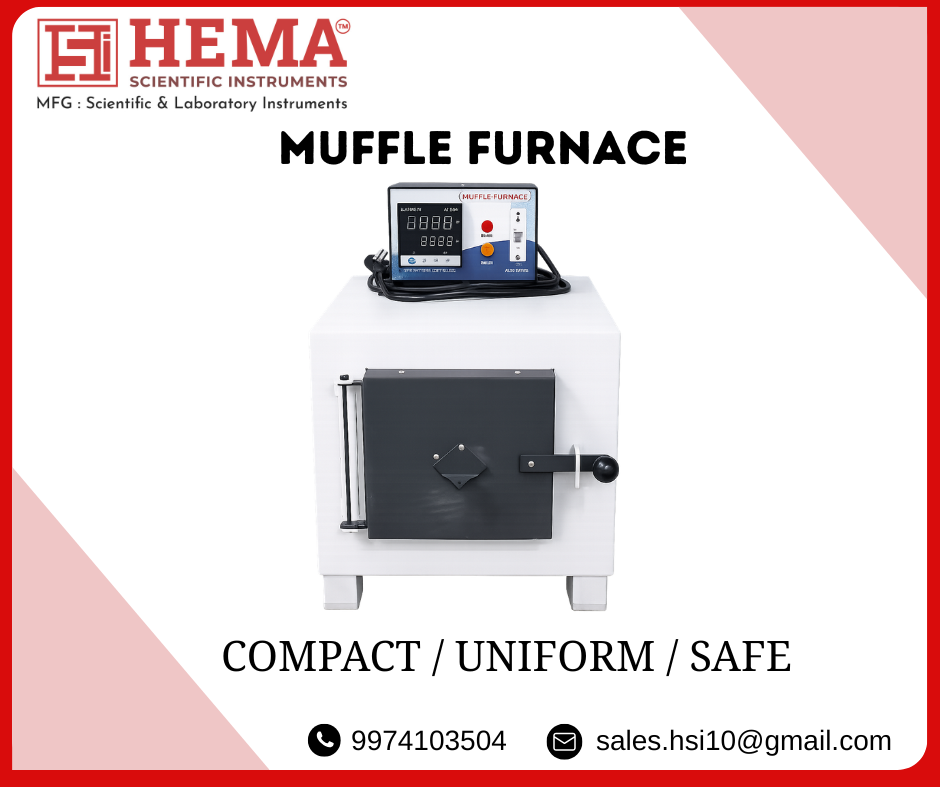
A muffle furnace is a laboratory heating device that uses high, uniform temperatures — often ranging from 500°C up to 1200°C or higher — to heat samples in an isolated chamber, without direct contact with flames or combustion by-products. The term "muffle" refers to the separation between the heating elements and the sample chamber, ensuring clean, contamination-free heating.
Muffle furnaces are essential in:
- Food and agricultural testing laboratories
- Metallurgy and materials testing labs
- Cement and ceramics industries
- Environmental and mineral testing labs
- Research and academic institutions
How Does a Muffle Furnace Work?
A muffle furnace relies on high-temperature heating elements (often silicon carbide or kanthal wire) positioned around an insulated chamber, isolated from the sample itself. Key components include:
- Heating elements — generate and maintain very high temperatures
- Refractory insulation — retains heat efficiently while protecting the outer body
- Digital/microprocessor-based controller — enables precise temperature setting, ramp rates, and programmable profiles
- Muffle chamber — the isolated inner chamber where samples are placed, shielded from direct heating elements
- Safety features — over-temperature protection, door interlocks
Samples are placed inside the chamber, and the furnace heats them to the required temperature for a set duration — commonly used to burn off organic material and leave behind an inorganic ash residue for analysis.
Key Applications of a Muffle Furnace
- Ash content determination — food, agricultural, and material testing
- Loss on Ignition (LOI) testing — cement, minerals, and soil analysis
- Metallurgical testing — heat treatment and material analysis
- Ceramics and glass testing — sintering and firing processes
- Environmental testing — determining volatile and inorganic content in samples
- Research applications — high-temperature sample preparation
Muffle Furnace vs Hot Air Oven: What's the Difference?
A common question for lab buyers is how a muffle furnace differs from a hot air oven:
- Muffle furnace operates at much higher temperatures (up to 1200°C+) and is used for ashing, ignition, and high-temperature material testing
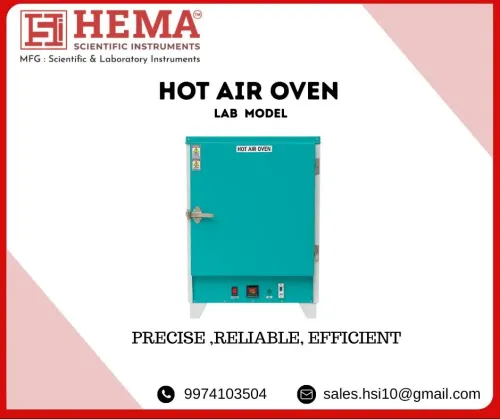
- Hot air oven operates at lower temperatures (up to ~300°C) and is used primarily for sterilization and drying
Most well-equipped labs use both instruments for different stages of sample preparation and testing.
Why Temperature Uniformity Matters
Inconsistent heat distribution inside a muffle furnace chamber can lead to incomplete ashing or inaccurate test results. That's why labs should choose furnaces with strong refractory insulation, accurate digital PID controllers, and verified temperature uniformity across the chamber.
Choosing the Right Muffle Furnace for Your Lab
When selecting a muffle furnace, consider:
- Chamber capacity based on sample volume and size
- Maximum temperature range and accuracy (± tolerance)
- Digital PID controller with programmable ramp/soak profiles
- Insulation quality and energy efficiency
- Safety features (over-temperature cut-off, door-lock safety)
- Compliance with relevant testing standards for your industry
A muffle furnace is a vital piece of equipment for any laboratory conducting high-temperature testing, from food ash analysis to metallurgical research. Choosing a well-insulated, accurately controlled unit ensures consistent, reliable results.
At Hema Scientific Instruments, we manufacture precision muffle furnaces engineered for high-temperature accuracy, safety, and durability.
Frequently Asked Questions
Q1. What temperature does a muffle furnace reach? Laboratory muffle furnaces typically operate between 500°C and 1200°C, with some high-end models reaching higher temperatures depending on the application.
Q2. What is the difference between a muffle furnace and a hot air oven? A muffle furnace operates at much higher temperatures and is used for ashing and high-temperature material testing, while a hot air oven operates at lower temperatures for sterilization and drying.
Q3. Who uses muffle furnaces? Food testing labs, metallurgy and materials testing labs, cement and ceramics industries, environmental labs, and research institutions.
Q4. What is ash content testing, and why does it need a muffle furnace? Ash content testing measures the inorganic residue left after burning off organic material — a muffle furnace's high, uniform temperature makes this possible accurately and consistently.
Q5. How often should a muffle furnace be calibrated? It's recommended to calibrate muffle furnaces periodically (commonly every 6–12 months) to maintain temperature accuracy and testing reliability.
📍 Hema Scientific Instruments
📧 Email: sales.hsi10@gmail.com
🌐 Website: www.hema-scientific.com
📞 Phone: +91- 9974103504